How to Safely Buy Social Media Accounts from Trusted Digital Marketplaces and Secure Vendors
How to Safely Buy Social Media Accounts from Trusted Digital Marketplaces and Secure Vendors
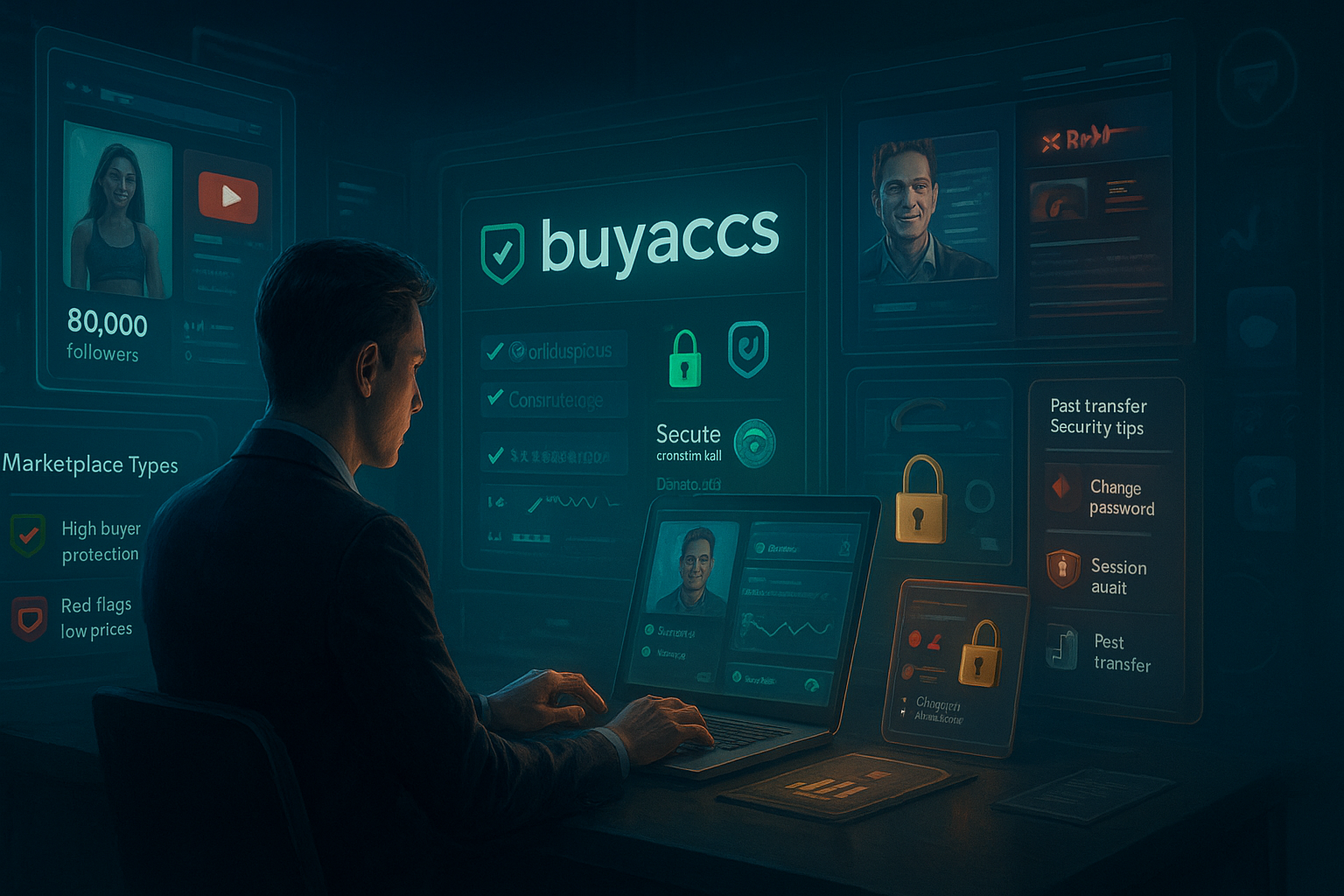
An Instagram page with 80,000 engaged followers in the fitness niche can sell for more than a mid-range car. That fact alone tells you everything about how seriously the market takes social media as a business asset. Account purchasing is no longer a fringe practice confined to growth hackers and grey-market operators - it has matured into a structured industry with its own marketplaces, pricing conventions, and professional vendors. The challenge is that the same growth has attracted fraudsters who know exactly how to exploit buyers who haven't done their homework.
The risks are real, but they are manageable. Buyers who approach online account sales with a clear methodology - verifying metrics independently, choosing the right platforms, and handling transfers correctly - consistently make sound acquisitions. Those who skip steps or chase suspiciously cheap listings pay for it. Platforms like buyaccs have built dedicated infrastructure around this need, offering verified listings, structured transactions, and the kind of accountability that informal peer-to-peer deals simply cannot provide.
This guide covers the entire process: how the digital account marketplace actually works, what makes an account worth buying, how to identify trustworthy vendors, how to complete a transfer without triggering platform security systems, and how to protect the account once it's yours. Every section is practical and specific, because this is a domain where vague advice gets people burned.
Understanding the Digital Account Marketplace: How Online Account Sales Work
The phrase "digital account marketplace" covers a wide range of environments, and confusing them is one of the first mistakes buyers make. At one end of the spectrum are fully managed platforms that verify sellers, audit account metrics, hold payments in escrow, and offer dispute resolution. At the other end are anonymous forums and Telegram groups where strangers exchange credentials with no accountability whatsoever. Most buyers, especially those new to the process, underestimate how much the platform type shapes their risk exposure.
The underlying mechanics of any account sale are consistent regardless of where it happens. A seller transfers login credentials - typically an email address, password, and access to linked recovery methods - to a buyer in exchange for payment. What varies enormously is whether that transfer is verified, documented, and protected. On a managed marketplace, the transaction is recorded, the seller's identity is often confirmed, and buyer funds are held until the transfer is complete. On a peer-to-peer forum, none of those safeguards exist by default.
Social media platforms themselves complicate the picture. Instagram, YouTube, TikTok, Facebook, and most other major networks explicitly prohibit the transfer of account ownership in their terms of service. This does not make buying illegal under national law in most jurisdictions, but it does mean the platform can suspend or permanently remove an account if it detects a transfer. Understanding this going in is not a reason to avoid purchasing - it is a reason to handle transactions discreetly and strategically.
- Fully managed platforms with escrow, seller verification, and dispute resolution
- Broker-assisted services where a third party facilitates the negotiation and handover
- Peer-to-peer forums and social groups with little to no formal buyer protection
- Direct vendor storefronts operated by individual sellers or small teams
The type of account being sold also shapes what you should expect from the transaction. A monetized YouTube channel with AdSense history involves more complexity than a dormant Instagram profile with an aged username. Monetized accounts may have contracts, third-party partnerships, or platform-specific earnings thresholds that cannot be legally inherited simply by changing login credentials. Knowing what category your target account falls into determines the due diligence steps required before committing money.
| Marketplace Type | Buyer Protection Level | Verification Standards | Typical Risk Level |
|---|---|---|---|
| Fully managed platform | High | Seller and account verification | Low to moderate |
| Broker-assisted service | Moderate | Varies by broker | Moderate |
| Peer-to-peer forum | Low | Minimal or none | High |
| Direct vendor storefront | Varies | Depends on vendor reputation | Moderate to high |
What to Look for When You Want to Buy Social Media Accounts
Deciding to buy social media accounts is the easy part. Deciding which one to buy requires discipline. The accounts listed on any marketplace range from genuinely valuable assets to inflated vanity metrics dressed up for sale. Knowing the difference before money changes hands is the entire point of the evaluation process.
Key Metrics That Determine Account Value
Follower count is the most visible number and among the least reliable indicators of actual value. An account with 150,000 followers and a 0.3% engagement rate is worth considerably less than one with 40,000 followers and consistent 5% engagement. The former suggests a history of follow-for-follow schemes, purchased followers, or a dead audience. The latter suggests a community that actually responds to content - which is what advertisers, partners, and audiences care about.
Beyond engagement, account age carries real weight. Older accounts have established credibility signals with the platform's algorithm and a posting history that provides insight into what the audience responds to. An account created three years ago with steady organic growth is a fundamentally different purchase than a six-month-old account with an artificially accelerated follower trajectory.
- Engagement rate: likes, comments, and shares relative to follower count, benchmarked against platform norms for the niche
- Follower demographics: age, location, language, and device breakdown, which affects alignment with your target audience
- Account age and posting consistency, including gaps that might indicate prior suspension or inactivity periods
- Monetization status and what specific revenue streams are attached to the account
- Growth trajectory over the prior three to six months, distinguishing organic patterns from spike-and-drop behavior
- Any history of platform warnings, strikes, or policy violations disclosed by the seller
Niche alignment is often underweighted by buyers focused on size. An account built around home renovation in German-speaking Europe has a specific audience that will not automatically respond to content in a different language or about a different topic. If your business operates in that niche and region, the audience is highly relevant. If not, you are paying for followers who have no connection to what you plan to publish. Audience relevance should be a primary filter, not an afterthought.
How to Verify Account Authenticity Before Purchasing
Sellers can fabricate screenshots, manipulate visible metrics, and present their accounts in the best possible light. Independent verification is the only reliable safeguard. The process takes time, but it is significantly shorter than recovering from a bad purchase.
- Request a live walkthrough of the account's native analytics - Instagram Insights, YouTube Studio, TikTok Analytics - conducted via screen share, not screenshots provided after the fact.
- Use third-party audit tools to analyze follower quality. These tools flag suspicious growth patterns, bot-like accounts, and engagement that does not match organic behavior.
- Ask for a rolling 30-day view of reach, impressions, and engagement to identify trends, not just the best-performing week.
- Verify that the account's linked email address and phone number are available for transfer, not locked to a recovery method the seller will retain.
- Search the account's username on web archive tools to review its public content history and confirm the niche has been consistent over time.
- Confirm the seller is the original account creator, not a reseller of a previously purchased profile - resellers frequently have less information about the account's history and cannot address questions about original content or early audience behavior.
Red Flags That Signal a Risky or Fraudulent Sale
Some warning signs are obvious in hindsight but easy to rationalize away when you want the account to be legitimate. A price that sits dramatically below comparable listings should raise immediate suspicion rather than excitement. Sellers know what their accounts are worth; when they price aggressively low, there is typically a reason they are not disclosing.
- Sellers who refuse live analytics access and provide only static screenshots
- Engagement patterns that are suspiciously uniform - the same number of likes on every post regardless of content quality
- No verifiable transaction history or feedback on any established platform
- Urgency tactics: claims that another buyer is ready to pay, that the price increases tomorrow, or that the window to purchase is closing
- Requests for full payment via non-reversible methods before the account credentials are shared
- Inability to answer basic questions about the account's history, original content strategy, or audience growth drivers
How to Identify Secure Account Vendors Worth Trusting
The quality of a transaction depends heavily on who you are dealing with. Secure account vendors are not impossible to find, but they require active identification rather than passive trust. Vendor credibility is built through documented history, transparent communication, and the willingness to operate within formal protection structures.
Evaluating Vendor Reputation and Track Record
A vendor who has completed hundreds of verified transactions on an established marketplace is operating in a fundamentally different risk tier than someone selling their first account through a social media post. Transaction history is the most reliable signal available, and it should be your starting point when researching any seller.
Look beyond raw numbers. A vendor with 200 completed sales and a consistent pattern of positive, detailed buyer reviews is more reassuring than one with 500 sales and generic one-line feedback. Detailed reviews that describe specific aspects of the transaction - communication, accuracy of account description, transfer process - indicate that real buyers had real experiences worth documenting.
- Number of completed and verified transactions on established platforms
- Quality and specificity of buyer reviews, not just overall rating scores
- Length of time the vendor has been active in the marketplace
- Responsiveness to pre-sale questions and willingness to answer account-specific queries without deflection
- Whether the vendor offers any post-sale support window or replacement policy for accounts lost due to platform action
Certifications, Escrow Services, and Buyer Guarantees
The single most effective structural protection in any account purchasing transaction is escrow. An escrow arrangement holds your payment in a neutral account - typically managed by the marketplace itself - until you confirm that the account has been received as described and that all credentials have been successfully transferred. Only then are funds released to the seller. This structure removes the incentive for sellers to disappear after receiving payment.
Not all vendors accept escrow willingly. A seller who pushes back against escrow and insists on direct payment is telling you something important about their confidence in the transaction holding up under scrutiny. Reputable secure account vendors actively support escrow because it also protects them from unfounded buyer disputes.
- Confirm the marketplace or vendor explicitly supports escrow or platform-protected payments before initiating any discussion of price
- Check whether the platform offers a formal dispute resolution process and what the timeline and criteria are
- Ask vendors directly whether they offer a guarantee period - typically 24 to 72 hours - during which a replacement or refund applies if the account is lost or materially misrepresented
- Look for vendors listed on platforms that require identity verification for sellers, which adds a layer of accountability absent from anonymous environments
| Vendor Evaluation Factor | What to Look For | Why It Matters |
|---|---|---|
| Transaction history | Documented, verifiable completed sales | Proves experience and reliability over time |
| Buyer reviews | Independent, detailed, and recent feedback | Reflects real buyer experiences, not self-reported claims |
| Payment structure | Escrow or platform-protected transactions | Protects funds until transfer is confirmed complete |
| Post-sale support | Guarantee period or replacement policy | Reduces exposure to post-transfer account loss |
| Communication quality | Prompt, specific, and transparent responses | Signals accountability and professionalism |
Step-by-Step Guide to Completing a Safe Account Purchasing Transaction
Even a trustworthy vendor and a legitimate account can become a problem if the transfer itself is handled carelessly. The handover phase is where most post-purchase complications originate - incomplete credential transfers, premature payment releases, and clumsy login sequences that trigger platform security reviews.
Setting Up the Transaction Securely
Before any payment is initiated, every term of the transaction should be documented in writing. This means the agreed price, exactly what is being transferred, the timeline for credential handover, and what recourse exists if the account does not match its description. Verbal or informal agreements evaporate the moment a dispute arises.
- Document all agreed terms in written form - a simple message thread on the marketplace platform is sufficient if it creates a timestamped record both parties can reference.
- Confirm the escrow arrangement before sharing any payment details. Funds should not move until the escrow structure is in place.
- Request that the seller prepare all linked recovery methods - the original email and any connected phone numbers - for transfer prior to the handover day.
- Capture screenshots of the account's current metrics and public profile as a baseline record before credentials are exchanged.
- Set up a dedicated email address specifically for managing this account. Linking a new acquisition directly to your primary personal or business email creates unnecessary exposure.
Transferring Ownership Without Triggering Platform Flags
Social media platforms monitor accounts for behavioral anomalies. A sudden change of email, password, and phone number - followed immediately by logins from a new device and location - is exactly the pattern their systems are designed to flag. A staged, deliberate transfer over 24 to 48 hours is considerably less likely to attract automated scrutiny than a complete credential overhaul in a single session.
- Change the account password first, log in successfully, and wait several hours before modifying the linked email or phone number
- Log in from a consistent location and device rather than rotating through multiple IP addresses in rapid succession
- Avoid dramatically changing the account's content style, posting frequency, or language immediately after gaining access - abrupt behavioral shifts register as anomalous
- Enable two-factor authentication tied to your own authenticator app before removing the previous owner's phone number from recovery options
Verifying Complete Ownership After Transfer
The escrow clock should not stop until you have confirmed that you - and only you - have full access to the account. A seller who retains the original recovery email can use the platform's built-in account recovery process to request ownership back, regardless of any agreement you have. This is not a hypothetical risk; it is the mechanism behind a significant share of post-purchase disputes.
- Verify that the original email linked to the account has been transferred to your control or changed to one you own outright.
- Remove all phone numbers, third-party apps, and connected services linked by the previous owner.
- Test the account recovery flow yourself to confirm that your credentials - not the seller's - are the only active recovery path.
- Review active login sessions in the platform's security settings and terminate any sessions initiated before the transfer.
- Release escrow funds only after completing every step above and confirming the account functions normally under your credentials.
Navigating the Legal and Ethical Landscape of Online Account Sales
The legal status of buying social media accounts is frequently misrepresented in both directions - by people who insist it is straightforwardly legal and by those who treat it as categorically prohibited. The reality is more nuanced and depends on the specific platform, the jurisdiction, and the nature of the account itself.
Under the laws of most countries, buying and selling social media accounts falls into a grey area. The transaction itself - transferring access credentials in exchange for payment - is not typically covered by criminal statutes. What creates legal exposure is how the account is used after purchase. Impersonating a known individual or brand, committing fraud against the inherited audience, or violating consumer protection regulations in the content you publish can all produce legal consequences that have nothing to do with the purchase itself.
The platform-level prohibition on ownership transfer is a separate matter entirely. When a platform detects that an account has changed hands - through behavioral signals, IP changes, or user reports - it may suspend or permanently remove the account. The buyer has no formal appeal right in this context, because the account was operating outside the platform's terms to begin with. This risk is real, it cannot be entirely eliminated, and it should factor into what you are willing to pay for an account.
- Review the specific terms of service for the platform hosting the account you intend to purchase before finalizing the deal
- Treat platform suspension as a genuine financial risk, not an unlikely edge case, when calculating acquisition cost versus expected value
- Avoid purchasing monetized accounts that carry third-party advertising or affiliate contracts - those agreements are typically non-transferable and may create liability
- For transactions involving accounts valued in the thousands of dollars, a brief consultation with a commercial attorney is a proportionate precaution
The ethical dimension is worth addressing directly rather than glossing over. Buying an account to deceive its existing audience - presenting yourself as a continuation of a creator they trusted, without disclosure - is a form of misrepresentation that carries real reputational and sometimes legal consequences. Buyers who intend to rebrand openly, disclose the change, and build a genuine relationship with the inherited audience occupy a substantially cleaner position both ethically and practically. Transparent rebranding also tends to retain more of the original audience, which is the asset you paid for in the first place.
Protecting Your Investment After You Buy Social Media Accounts
The period immediately following a transfer is when newly acquired accounts are most vulnerable. The previous owner may still have passive access through linked services you have not yet audited. The platform's algorithms may flag behavioral changes. And you may not yet fully understand the content patterns that kept the audience engaged. Immediate, systematic security work is not optional - it is the first task of account ownership.
Immediate Security Steps After Account Transfer
- Change the account password to a unique string - not a variation of any password used elsewhere in your business or personal accounts.
- Enable two-factor authentication through an authenticator application rather than SMS, which is more vulnerable to SIM-swapping attacks.
- Audit every third-party application connected to the account and revoke access to anything not immediately recognizable or necessary.
- Confirm that the recovery email and phone number now reflect your information exclusively - no residual seller data should remain in any security field.
- Review the platform's active sessions list and force-logout any sessions predating the transfer.
Long-Term Account Maintenance and Risk Reduction
Security hardening gets the account stable. Keeping it that way requires ongoing discipline. Accounts that were built carefully over years can deteriorate quickly if the new owner disrupts the behavioral patterns the platform's algorithm associated with healthy content performance.
- Maintain posting consistency in the weeks following transfer - sudden inactivity or an abrupt shift in frequency disrupts algorithmic momentum
- Monitor engagement metrics weekly for the first two months to detect drops that might indicate shadow restrictions or algorithmic adjustments triggered by the ownership change
- Keep thorough documentation of the purchase: transaction records, screenshots of the account at transfer, and written confirmation of the seller's representation of the account's history
- Avoid third-party automation tools that violate platform rules in the immediate post-transfer period, when the account is already more susceptible to review
- Stay current with platform policy updates - terms of service change, and what was acceptable practice at purchase may not remain so
Common Mistakes to Avoid When Purchasing Social Media Accounts
The most costly mistakes in account purchasing are rarely dramatic acts of negligence. They are quiet omissions - steps skipped under time pressure, safeguards bypassed because the seller seemed trustworthy, verification processes abandoned because the metrics looked right on the surface. The pattern is consistent across buyers at every experience level.
| Common Mistake | Why It Happens | How to Avoid It |
|---|---|---|
| Accepting seller-provided screenshots as verification | Convenience and misplaced trust | Require live analytics access via screen share before agreeing to any price |
| Paying without escrow protection | Seller insists on direct transfer or claims escrow is unnecessary | Treat insistence on unprotected payment as a disqualifying red flag |
| Releasing funds before completing credential audit | Rushing to close the deal after credentials appear to work | Complete the full security checklist before authorizing escrow release |
| Overvaluing follower count relative to engagement quality | Size is visible; quality requires analysis | Calculate engagement rate as a primary metric and use audit tools to verify audience authenticity |
| Ignoring platform terms of service implications | Assuming the risk is negligible or theoretical | Factor platform suspension probability into the acquisition decision and price |
| Overhauling the account immediately after purchase | Eagerness to rebrand and make the account feel like your own | Stage changes gradually over several weeks to reduce algorithmic disruption |
One mistake worth addressing separately is purchasing from informal sources specifically because the price is lower. The savings disappear immediately if the account is reclaimed, suspended, or revealed to have misrepresented metrics. The cost of a reliable digital account marketplace's fees or an escrow service is trivial compared to the cost of a failed acquisition. Price optimization makes sense at the negotiation stage with a vetted vendor - not by choosing an unprotected channel to avoid transaction fees.
Frequently Asked Questions
Can the original owner take back the account after I have paid for it?
Yes - if the seller retains access to the original recovery email or phone number, they can use the platform's account recovery process to reclaim the account regardless of any payment made. This is why transferring or changing all recovery credentials must be completed before escrow funds are released. Never release payment based on receiving login credentials alone.
How do I tell whether an account's followers are genuinely engaged or artificially inflated?
Run the account through a third-party follower audit tool and compare the results against the seller's claimed metrics. Look specifically at the ratio of engagements to followers across multiple posts, the follower growth curve for unnatural spikes, and the profile completeness of a sample of followers. Accounts with purchased followers typically show uniform engagement numbers regardless of content variation and follower profiles that lack biographical details or posting history.
What payment method provides the most protection when completing an account purchasing transaction?
Escrow services integrated into established marketplaces provide the strongest protection because funds are held by a neutral party until both sides confirm the transaction is complete. If a dedicated marketplace escrow is not available, use a payment service that allows disputes or chargebacks, and never pay via irreversible methods - cryptocurrency transfers without escrow or direct wire transfers - before the account has been fully transferred to your control.
How long after purchase should I wait before rebranding the account?
A minimum of two to four weeks of stable, consistent posting under the existing content format before introducing visible changes significantly reduces the risk of algorithmic disruption. Gradual shifts - adjusting visual style before changing content topics, for example - are less disruptive than simultaneous overhauls across name, content type, and posting frequency. If you plan to publicly announce a rebrand, doing so within the first month tends to retain more of the existing audience than leaving followers to notice the change without explanation.
Is there any way to assess whether a seller is listing an account they do not actually own?
Ask the seller to make a specific, temporary change to the account's public profile - changing the bio text or profile image - during a live video call or screen share. A seller who cannot make that change in real time does not have active access to the account and is likely reselling credentials or misrepresenting ownership. Legitimate sellers with genuine access can demonstrate control immediately without needing to arrange it in advance.
Are certain social media platforms safer to buy accounts on than others from a platform-risk standpoint?
Platform risk varies based on how aggressively each network enforces its terms and how sophisticated its anomaly detection is. Generally, platforms with robust identity verification requirements and active fraud detection create higher post-transfer risk. The practical implication is that the more valuable an account is on a given platform, the more carefully the transfer process must be managed - not that purchasing on stricter platforms is automatically inadvisable, but that the staging and credential transfer process needs to be more deliberate.